Tag Archives: Photography

Fashion Moments – Leg o’ Mutton Sleeves

Fashion Moments by Deborah SweeneyWelcome to my weekly fashion blog post. Each week I will discuss a female garment, fashion trend or influencer from the age of photography (1840s through the 20th century). My goal is to educate family researchers and genealogists about the clothing worn by our ancestors. Dating photographs is an issue we all struggle with as family archivists. Additionally, anyone who writes about their family’s history should be aware of the environment in which their ancestors lived. Period clothing is an important part of that environment from how it affects a person’s movement to their overall lifestyle. This week I introduce you to the Leg o’ Mutton sleeve.

Sleeves from the 1820s-1830s

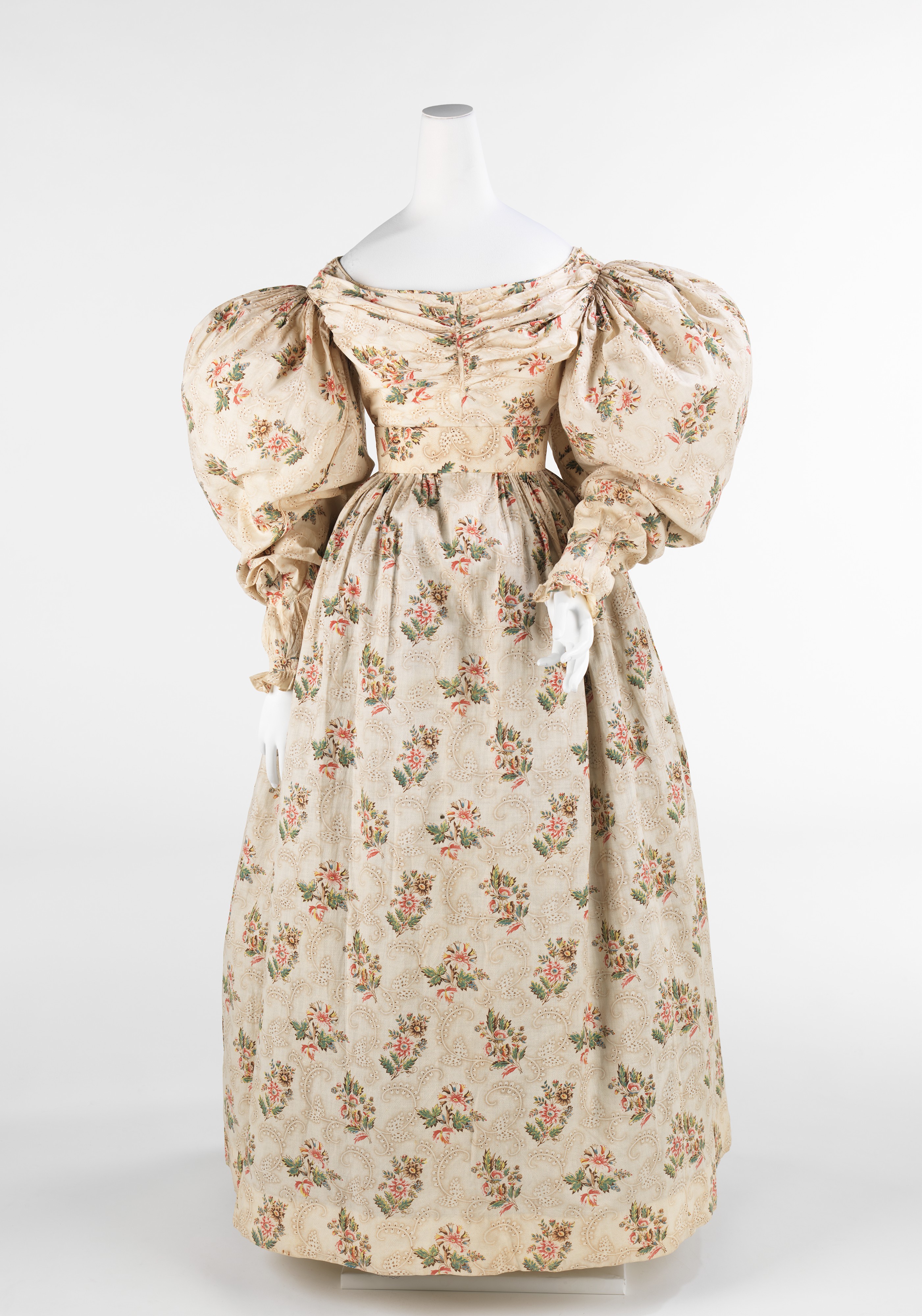
The Leg o’ Mutton sleeve made its first appearance in the late 1820s; the style continued into the 1830s. The French originally named this style the gigot sleeve due to the sleeve’s unique shape. In French, gigot literally means the hind quarters of an animal. In the English speaking world, the name translated into Leg of Mutton, or Leg o’ Mutton. This sleeve was characterized by voluminous amounts of fabric at the sleeve cap which eventually tapered down narrowly at the wrist. Horsehair and other means of support were required to maintain the “puff.” To balance the ensemble, skirts became wider at the bottom and the waist became deceptively narrower.

American, Cotton dress, c.1832-5 (Courtesy of the Brooklyn Costume Museum at the Metropolitan Museum of Art)

“Oh I am grateful,” protested Anne. “But I’d be ever so much gratefuller if–if you’d made just one of them with puffed sleeves. Puffed sleeves are so fashionable now. It would give me such a thrill, Marilla, just to wear a dress with puffed sleeves.”

Anne of Green Gables, Lucy M. Montgomery

Fashion Reboot – 1890s

As the bustle made its final decline at the end of the 1880s, a void was created. What would the next fashion trend be? As is typical with fashion, old became new again. The 1890s saw a resurgence (or recycling!) of the Leg o’ Mutton sleeve. As the bustle began to decrease, fashion shifted from an exaggerated posterior to an extreme expansion of shoulder girth.

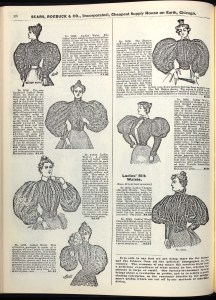
A cursory glance through fashion journals shows the absence of the Leg O’ Mutton sleeve in 1891. By 1893, sleeves had begun to inflate.  The peak of the sleeve appears to have been the years 1895 and 1896, and by 1897, the style was on the wane. (Please note that throughout the same decade, fashion journals consistently showcased sleeves of moderate girth as well. Do not assume that because a woman’s sleeves are narrower in a photograph that it was not during the years 1893-1897 if other clues indicate this time frame). The following plates are courtesy of the Thomas J. Watson Library, Metropolitan Museum of Art (New York).

Further Reading

The Fashion Historian blogged about the original French Gigot sleeve from the 1830s.

A definition and history of Gigot sleeve from the Fashion Encyclopedia.

Collection of Fashion plates from the Costume Institute of the Metropolitan Museum of Art. Most of the plates are in the public domain.

©2015 Deborah Sweeney
Post originally found: https://genealogylady.net/2015/07/12/fashion-moments-leg-o-mutton-sleeves/

Fashion Moments – Marcel Wave

Fashion Moments by Deborah SweeneyWelcome to my weekly fashion blog post. Each week I will discuss a female garment, fashion trend or influencer from the age of photography (1840s through the 20th century). My goal is to educate family researchers and genealogists about the clothing worn by our ancestors. Dating photographs is an issue we all struggle with as family archivists. Additionally, anyone who writes about their family’s history should be aware of the environment in which their ancestors lived. Period clothing is an important part of that environment from how it affects a person’s movement to their overall lifestyle. This week I introduce you to the 19th century French hair dresser Francois Marcel.

Who was François Marcel?

There are conflicting reports about who Francois Marcel was, mostly due to the fact that he used different names throughout his career. However, it appears that he was François Marcel Grateau (1852-1936).  During the 1870s, he invented a technique for curling hair using hot curling tongs. By 1905, then known as François Marcel Woelfflé. he patented his first design for a curling iron in the United States. Marcel continued to register patents for various curling irons, permanent machines and hair clippers until his death in 1936.

Marcel Wave

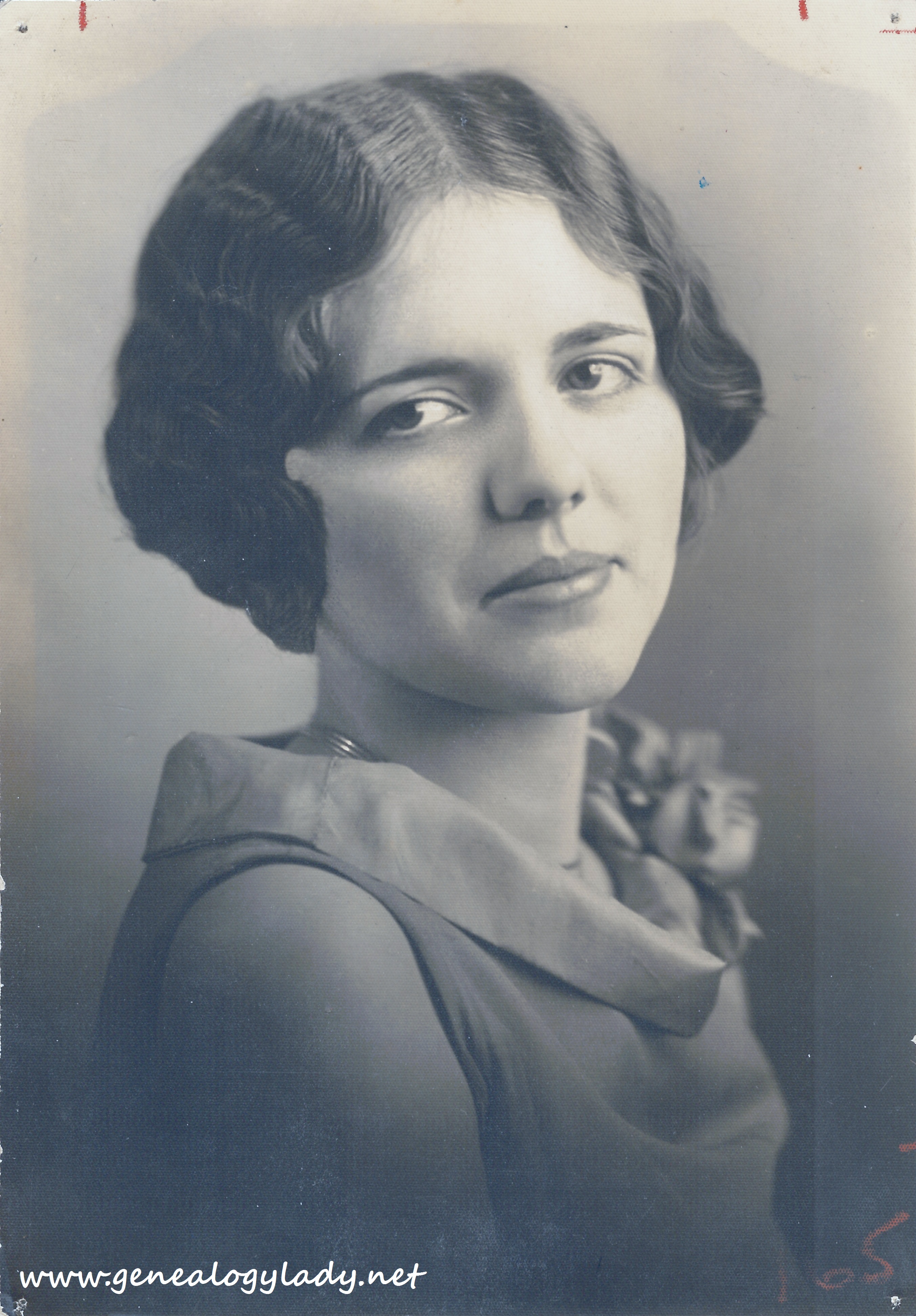
Although the technique was originally perfected for longer hair which was styled up and back, as women began to “bob” their hair in the 1920s, the Marcel wave became even more popular. Many film stars, like Claudette Colbert, sported Marcel waves during the 1920s. My grandmother Gladys employed the style on her hair during the late 1920s and early 1930s. This picture was taken in 1929. The main characteristic of the Marcel wave is the alternating “S” shape in the rows of waves.

Foster, Gladys - Terre Haute, Indiana,1929

Gladys Foster, Terre Haute, Indiana, 1929

The style was not restricted to the young and famous, or to specific geographic regions. Women of all ages and social standing “marcelled” their hair.  Coincidentally also in 1929, this photograph was taken in the San Francisco Bay area. While my other grandmother, Louise, was only 14 at the time, her mother stylishly wears the Marcel wave in her hair.

Leonard, C. Estelle (Whitten)  with Louise - 1929-07

Louise and Estelle Leonard, San Francisco Bay area, 1929

Further Reading

Article on the website 1920-30.com discusses Marcel and the Marcel Wave in more depth.

Book titled Technique and Art of Marcel Waving – Creating 1920s Hair Waving Styles in Six Easy Steps by William Zentler was originally published in 1923, and currently available as a reprint.

Check out Ancestry.com‘s selection of high school and college yearbooks in their database, “U.S. School Yearbooks, 1880-2012.” These provide a great resource for dating hairstyles on a yearly basis.

©2015 written by Deborah Sweeney
Post originally found: https://genealogylady.net/2015/06/28/fashion-moments-marcel-wave/

Fashion Moments – The Shirtwaist

Fashion Moments by Deborah Sweeney

This is the first in a new weekly series on specific fashion trends. Each week I will present a different garment or piece of female fashion that was prevalent during the 19th and 20th centuries. My goal is to educate family researchers and genealogists about the clothing worn by our ancestors. Dating photographs is an issue we all encounter and struggle with as family archivists. Additionally, anyone who writes about their family history should be aware of the environment in which our ancestors lived, and that includes what clothes they wore.

The Shirtwaist

The shirtwaist was a mainstay of the female wardrobe from the end of the 19th century and into the 20th century. What exactly is a shirtwaist? To understand the evolution of the term, it is necessary to understand the definition of waist to a 19th century person. In modern times, the word waist refers to the part of the human body between the ribs and hips. In the past, waist was another term for the bodice of a woman’s dress.

Waist (wāst) n. The upper part of a garment, extending from the shoulders to the waistline, esp. the bodice of a woman’s dress.

As women became more independent and began working outside the home, their style of dress was modeled after male attire. A well dressed man of business typically wore a white shirt with a turned down collar and cuffs under his coat and/or vest. The term shirtwaist was a combination of the two terms: shirt + waist. Therefore, shirtwaist is a term only used to describe the female version of a male dress shirt.

 Shirtwaist (shȗrt’ wāst) n. A woman’s tailored shirt with details copied from men’s shirts.

A typical shirtwaist was unstructured (no boning or inner lining) and was made from a material such as cotton or linen. Occasionally they were made of silk. Another benefit of the shirtwaist was the ease of laundering. Boned and lined bodices were generally not washed often. Over time, shirtwaists evolved from the simple tailored version of a man’s shirt to beautiful feminine garments embellished with lace and trimmings.

Shirtwaist, c1895, American silk and cotton

Shirtwaist, American, c1895 (silk & cotton). Metropolitan Museum of Art Costume Collection

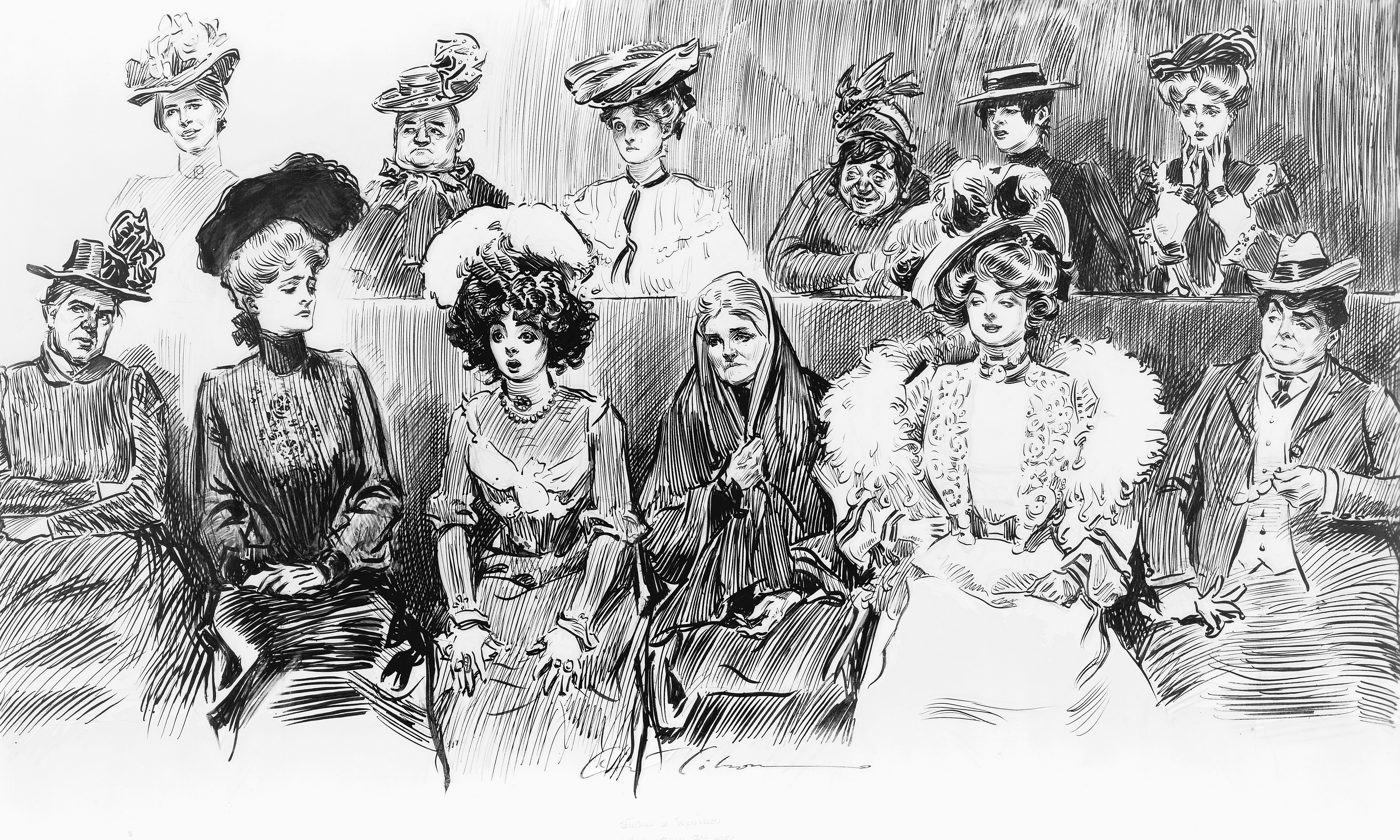
Although introduced as early as the 1860s, shirtwaists became more popular as the 19th century progressed. With illustrators like Charles Dana Gibson regularly drawing sporty and active women, women’s dress was finally changing. However, it would take another twenty or so years before the more natural styles of the 1920s became fashionable. By the mid 1890s, women were no longer being hampered by bustles and hoops as well as obsessive corseting. The movement to promote Aesthetic Dress (which began in England in the 1850s and was led by artists such as Edward Burne-Jones, Frederic Leighton and Lawrence Alma-Tadema) also influenced the trend towards healthier and non-restrictive clothing for women. The Aesthetic dress movement rejected the wearing of tight-laced corsets altogether.

Charles_Dana_Gibson_(1902)_Studies_in_expression._When_women_are_jurors

A study for “When Women Are Jurors,” by Charles Dana Gibson, 1902 (Image in the Public Domain via Wikipedia Commons)

The term shirtwaist, or waist for short, endured from the early 1890s though the 1920s. The term finally passed out of common usage with shirt and blouse being more commonly used today.

Perhaps one of the most well known events regarding the shirtwaist was the 1911 Triangle Factory fire in New York City. Shirtwaists were very popular and cheap to manufacture. Mail order catalogues as well as clothing stores all sold shirtwaists. See the links below to learn more about the Triangle Factory fire, and PBS’s documentary about this tragedy which killed hundreds of immigrant factory workers. The overwhelming majority of the victims were women.

Evolution of the Shirtwaist

The style of the shirtwaist changed over the years. When dating photographs, it is important to note the changes to cuffs, collars and necklines as well as the rise and fall of the waistline.

Shirt waist patterns from the Modern Priscilla Magazine, 1906. (Image from the Library of Congress)

For Further Reading:

More about the fashion trends that influenced the Aesthetic Dress Movement:

http://www.maggiemayfashions.com/secondbustle.html
http://en.wikipedia.org/wiki/Artistic_Dress_movement
http://www.artfund.org/what-to-see/exhibitions/2015/02/17/liberating-fashion-aesthetic-dress-in-victorian-portraits-exhibition

On the Triangle Shirtwaist Fire and Shirtwaists:
http://www.pbs.org/wgbh/americanexperience/features/introduction/triangle-intro/
http://www.pbs.org/wgbh/americanexperience/features/general-article/triangle-shirtwaist/
https://prezi.com/4kvervvcyl3v/defining-the-shirtwaist-1890-1918/

©2015 written by Deborah Sweeney
Post originally found: https://genealogylady.net/2015/05/30/fashion-moments-the-shirtwaist/

Monthly Update – May 14, 2015

Dear Mother, Love Daddy coverDear Mother, Love Daddy

I have not set up a book giveaway this month so I am trying something new. I figured out how to offer discounts directly through the Create Space publishing website.  For a limited time, using coupon code: 6AVMLLGB, Dear Mother, Love Daddy will be $12.99. The purchase must be through the Create Space store (not Amazon). Use the link to go directly to the book: https://www.createspace.com/4935415 Please let me know if you encounter any difficulties using this method.

My newest shipment of books has arrived. Exclusively through me, I am offering autographed copies of the book for $20. Priority mail shipping is included. Send me a message through the contact form on the website. For anyone attending Jamboree in southern California in June, I will have a few copies for sale for $15.

I have contacted a few World War II museums including the National Museum of the Pacific War in Fredericksburg, Texas. Since Roscoe served in the Pacific, this museum was responsive to receiving a donated copy of the book for their archives. The number of museums and libraries I have contacted who have not responded has been slightly disheartening.  If you are aware of any museums, libraries, veterans’ groups, or military organizations who might be interested in receiving a donated copy of Dear Mother, Love Daddy, please leave a comment below or send me a message through the contact form.

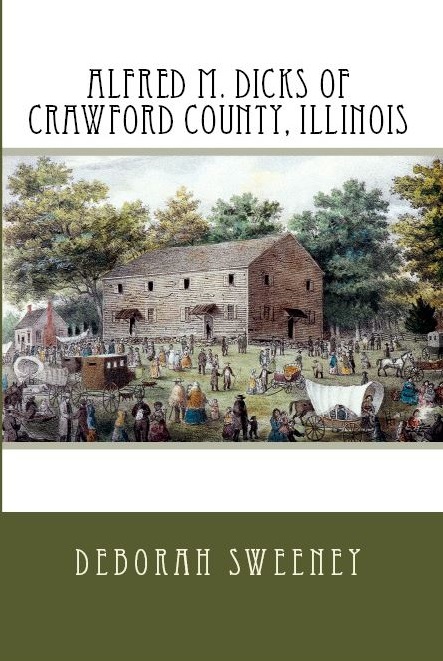
Alfred M. Dicks Cover #3 (front)Alfred M. Dicks of Crawford County, Illinois

I have not done much to market my first book as I felt the audience was very small. The book’s target audience is the descendants of Alfred and his extended family (his siblings, their descendants, etc). Since very few records about Alfred exist and he was a migrant, his descendants have been trying to break through the brick wall of his ancestry for over a generation. The book provides a good example of a proof argument for anyone looking to expand their genealogical writing skills. Since I am trying to reach a specific target audience, I donated a few copies to several genealogy libraries, including the National Genealogical Society’s library in St. Louis. As a thank you to their members for donating books, the National Genealogical Society publishes brief synopses of donated books in their quarterly magazine, the NGS Magazine. The latest issue (April-June 2015) features a synopsis of Alfred M. Dicks of Crawford County, Illinois (p. 9). As a result, I am seeing a slight increase in sales of this book (which is a completely unexpected benefit of the donation).

Professional Learning

I have been told that my ProGen certificate is in the process of being signed by all my mentors. Angela McGhie has passed on the certificates to Barbara Mathews, C.G. Rest assured, I will be posting a copy of the certificate when it finally arrives on my doorstep!

I still haven’t decided what new coursework to take on yet. It’s been rather nice not having to worry about a homework assignment though.

Genealogy Programs Summer Sac LibraryLocal News

This last weekend I met with the volunteer coordinator at my library branch. Hopefully, by the end of the month, we will have our own Ask A Genealogist program up and running. Tentatively, I will be volunteering one Saturday afternoon a month to help mentor people with their genealogy problems. The library will handle booking the time slots and the advertising.

This summer one of my BU classmates, Jim Walton, will be giving a presentation at the main branch of the Sacramento Library. Jim’s lecture will be based (I think) upon some of the research he did on his Walton line. His article “John Walton, English Immigrant, New Hampshire Native, or Phantom?” was published in the December 2014 issue of the National Genealogical Society Quarterly.

Pinterest
Painted by Deborah Sweeney

Painted by Deborah Sweeney

I continue to pin clothing from the 19th and early 20th century on Pinterest. Each board covers clothing from one decade, beginning with the 1820s through the 1920s. Future boards will be for the 1930s, 1940s, and 1950s. I have published two articles in my series “Identifying Everyday Clues in Photographs.” The next article will begin to put together period silhouettes and timelines of individuals. My newest Pinterest board is Genealogy and Fashion. Links to all the articles in the Identifying Everyday Clues series are pinned there.

https://www.pinterest.com/GenealogyLadyCA/genealogy-and-fashion/

 Book Review

I am continuing to work on this part of the blog, but it is one of the most time consuming aspects! While I love to read, finding the time can be hard. Many of you may not know that I am a die hard bookworm. I love mysteries, science fiction, fantasy, YA/teen literature and historical fiction. For the past few years, I have participated in an annual book challenge. One of my college friends is a children’s librarian in Massachusetts and her library runs the challenge. Previously, the contest was all about how many books could one read in a year. The goal was 50. Some years I made it while others I did not. This year the challenge has evolved to categories instead of a book count. I am currently working on my “Trilogy” requirement. I am on the last book in Deborah Harkness’ A Discovery of Witches series. While I am enjoying the series very much, I will not be reviewing on my blog. The next book I am in the process of reading for a book review is Disaster & Triumph: Sacramento Women, Gold Rush Through the Civil War by Cheryl Anne Stapp. The book focuses on six women who lived in the Sacramento area during the Gold Rush years. The author has used many historical resources to build and tell their stories. I am hoping to finish reading this book in the next few weeks.

Looking Ahead

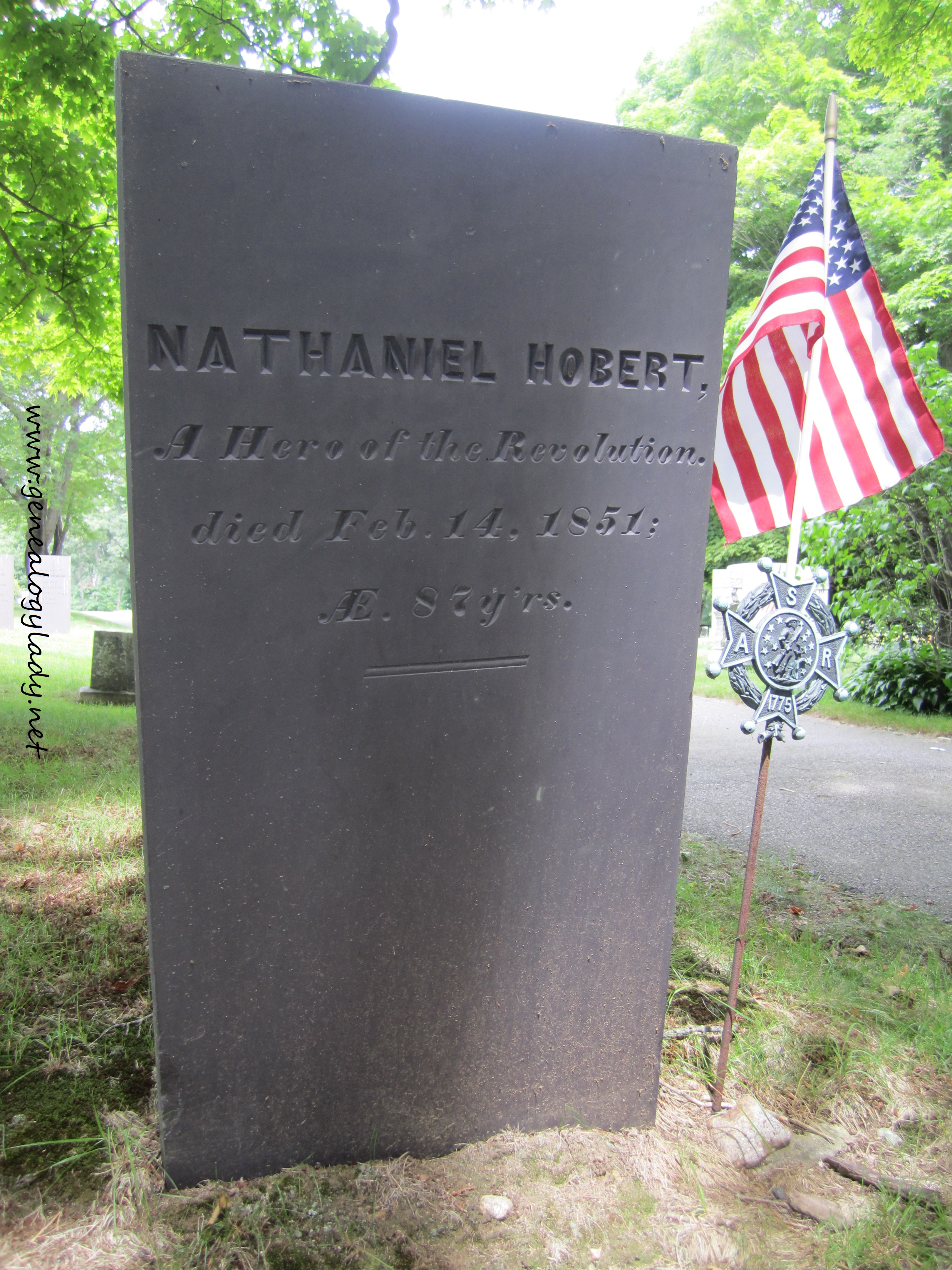
Hobert, Nathaniel - gravestone

Gravestone of Nathaniel Hobert. Future subject of a Register article?

I am contemplating writing an article for the “new” New England Historical and Genealogical Register. The Register was been published for 170 years and is one of the top journals of genealogy scholarship in the country. I have many New England stories I want to tell and the journal would be a perfect place to see them published. I have a couple ancestors that I used in my ProGen research and assignments so I can not really use them for my BCG portfolio (as they have already been reviewed).

And of course, I am counting down the days until Jamboree. I have started looking at the schedules to see which lectures I am interested in attending. Some lectures will be live-streamed so I could watch them later when I get home. For a list of speakers and the schedule, check out the Jamboree website:

 http://genealogyjamboree.com/

 Blogger badge-blogger-1

©2015 copyright by Deborah Sweeney
Post originally found: https://genealogylady.net/2015/05/14/monthly-update-may-14-2015/
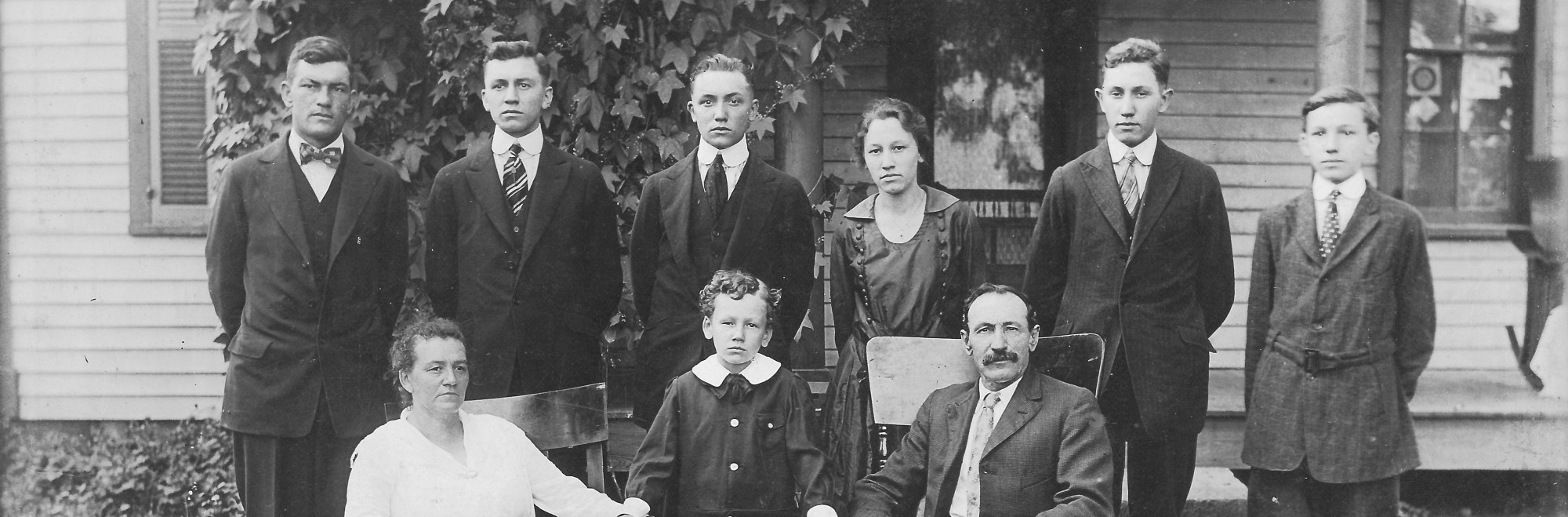
Identifying Everyday Clues in Photographs, Part II

Dating PhotographsIn my first post in this series, I set out to date a photograph of my 2X great grandmother, Elizabeth (Schwartz) Yegerlehner and one of her granddaughters, an unidentified Wolfe. I went through the process of identifying clues in the photograph that would provide me with usable information. Each woman was broken down by age and by the various parts of her clothing.

Before we proceed further, I want to add a few fashion warnings. Dating photographs is never a precise process, and oftentimes, without other documentary evidence, may never be completely accurate. My goal is to help the average genealogist or vintage photography enthusiast to understand and recognize fashion trends as well as to give advice for finding resources.

  • Older people may not change their clothing fashions as quickly as younger persons do or be inclined to adopt new trends, however this is not always the case. A great example would be in the costumes of Downton Abbey. The Dowager Duchess was wealthy enough to buy new clothing every season but her clothing style evolved more slowly than some of the younger characters like those of her granddaughters: Mary, Edith and Sybil.
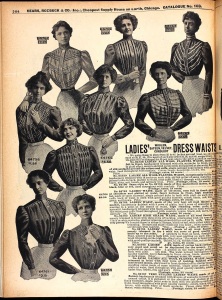
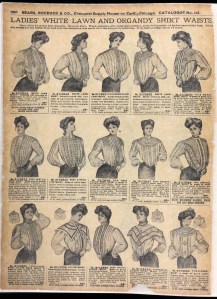
  • People from metropolitan areas are more fashionable than rural areas (sometimes!). With the advent of ladies and fashion periodicals, like Godey’s Lady’s Book, country women were able to see the latest fashions more quickly. Mail order catalogues, like Sears, Roebuck & Co. and the National Cloak & Suit Co., allowed women away from the big cities to purchase the latest fashions. Even if they made their own clothing, they could be inspired by the fashion plates. Pattern companies, like McCall’s and Butterick, also sold high fashion to rural customers.
  • Working class people dressed differently than wealthier people. One must always consider class when dating a photograph. The “best” dress for a poorer woman might last for many years while the “best” dress for a wealthy woman might last one season. People tended to hold onto clothing, and remade dresses year after year, as well as handing them down to young folk.

The second step is to Identify the Period Silhouette:

What is a period silhouette, you might ask? A handout from the The Secret Life of Costumes by Canada’s National Art Centre describes it thus….

“A silhouette provides an uncluttered outline of the basic shape of a person from a particular period in history as dictated by the clothing worn. Each shape is different from any in the century either before or after. The outline of your body wearing today’s styles would be very different from your great grandmother’s or grandfather’s shape at the same age.”

The pdf article contains wonderful advice as well as a fun activity for identifying some different silhouettes. Make sure you download it for future reference!

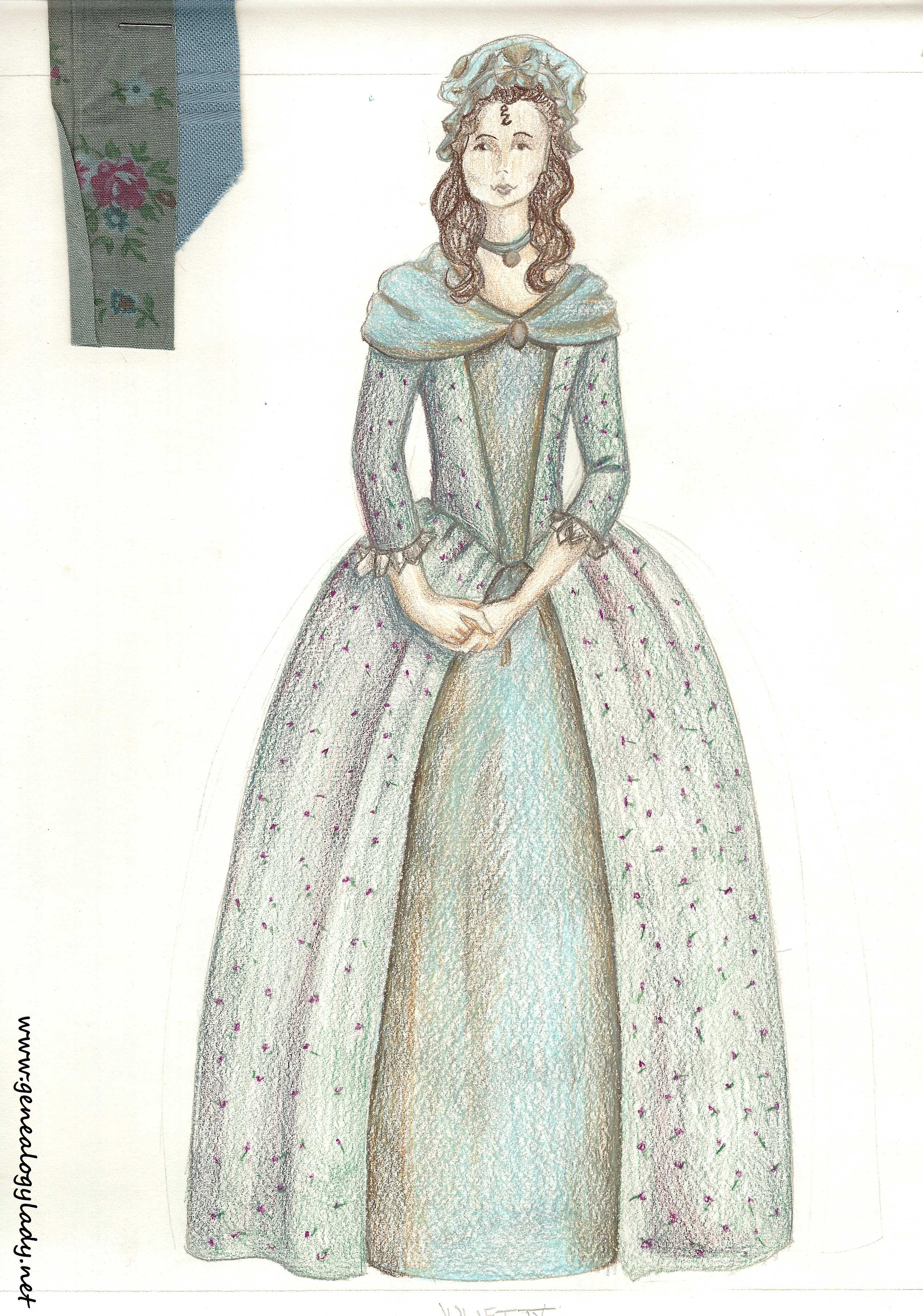
Fashion silhouettes can change very rapidly. They can also overlap as evidenced by my first point above. A woman from 1880 will have a different silhouette from a woman in 1860 or 1900. In both of my costume history courses, I was required to keep a sketchbook of period silhouettes for every century from the 1st through the 20th, for men and women. Within a hundred year period, fashion silhouettes can change a dozen times or more. Just for fun, I’m including two costume renderings from two different time periods, about 100 years apart. Try guessing the decades of the two pictures, and leave your answer in the comments!

Learning the intricacies of fashion trends takes time, and requires paying attention to little details.

There are many great resources for learning about historical fashion trends, in contemporary documents. Here are a few:

A couple sources for Godey’s Lady’s Book
http://www.accessible-archives.com/collections/godeys-ladys-book/
http://onlinebooks.library.upenn.edu/webbin/serial?id=godeylady

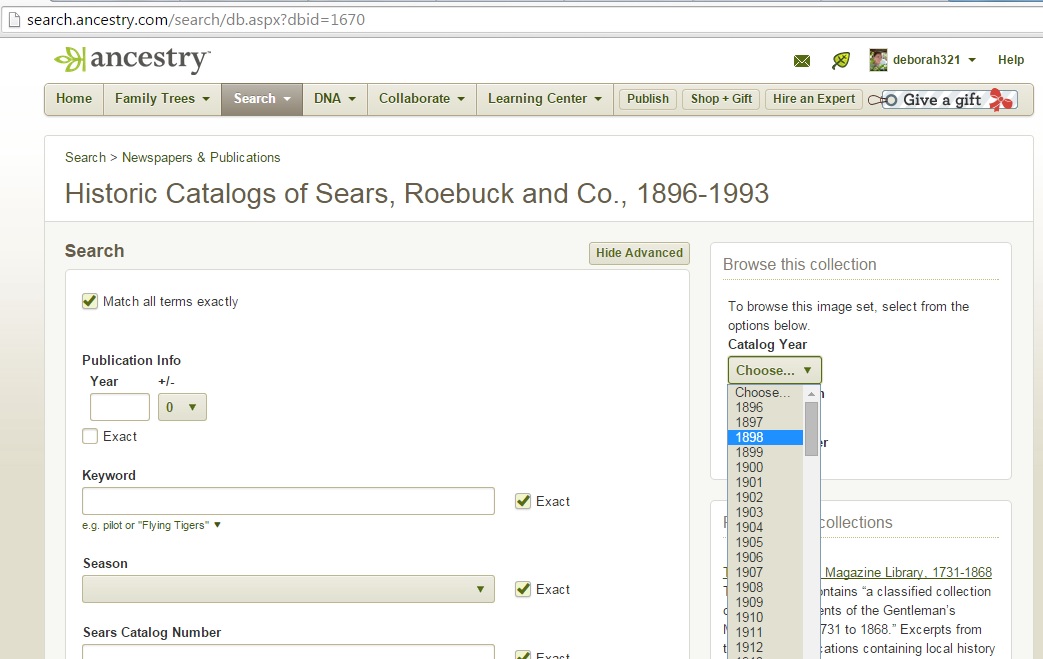
Ancestry has many Sears catalogs available for searching from 1896-1993. To find them, go to Ancestry’s main catalogue and search under Sears. You can browse by year. Many years had more than one to chose from (spring/fall).

Ancestry screen shot

Internet Archive has many old catalogs and magazines in their collection. Here is a National Cloak & Suit Co. catalogue  from 1907: https://archive.org/details/newyorkfashions00nati

Dover books sells reprints of old fashion catalogues. Be careful of some of their “costume” books as they are secondary sources.
http://store.doverpublications.com/by-subject-fashion-and-costume-vintage-fashion-catalogs.html

Dated photographs are great resources since fashion plates are not always realistically drawn.

The Library of Congress has a Civil War Collection: http://www.loc.gov/pictures/collection/cwp/

The website PhotoTree has thousands of dated photographs:
http://www.phototree.com/gallery.asp?cat=90s&f0=1890s

Several museums have clothing collections.

One of my favorite is the Metropolitan Museum of Art’s Costume Institute. Here is an example of a shirtwaist, dated 1899-1902:
http://www.metmuseum.org/collection/the-collection-online/search/109353?rpp=30&pg=1&ft=shirtwaist&pos=10

©2015 copyright by Deborah Sweeney
Post originally found: https://genealogylady.net/2015/05/09/identifying-everyday-clues-in-photographs-part-ii/

Wordless Wednesday – Garden

I have to admit, I love taking pictures. I wish I were a better photographer. I love reading my grandmother’s letters about the gardens: her flowers and Mark’s vegetables. We have a small container garden in our backyard. I definitely do not have my grandmother’s green thumb, but here are some of the things we are growing this year.

SWE2014 - Strawberry


SWE2014 - Yellow Pear Tomato


SWE2014 - Raspberry


Photographs from the private collection of Deborah Sweeney.

© Deborah Sweeney, 2014.
Post originally found: https://genealogylady.net/2014/06/04/wordless-wednesday-garden/